
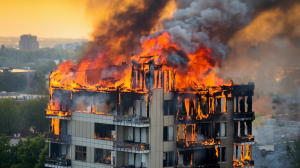
Building thermal insulation is essential for improving energy efficiency and reducing consumption. However, the use of flammable insulating materials poses a serious safety risk. Recent fires in renovated buildings have highlighted this issue, emphasizing the need for safer solutions, such as fire-resistant thermal insulators.
The Danger of Flammable Thermal Insulators
Many current thermal insulation systems are made from petroleum-derived materials, such as EPS (expanded polystyrene) and XPS (extruded polystyrene). While thermally efficient, these materials are highly combustible and, in the event of a fire, can spread flames and release toxic fumes.
According to the president of the College of Engineers and Architects of Milan and a professor of fire safety engineering at the Polytechnic University of Milan, attention has so far been focused mainly on the thermal performance of buildings, neglecting aspects related to fire safety. This imbalance has led to the proliferation of materials that, while improving energy efficiency, can endanger people’s lives.
Regulations and Responsibility in Material Selection
Despite the existence of specific regulations for facades and roofs, the use of low-class insulation panels, such as class E, which indicates a high level of fire participation, remains common. Regulations allow their use in many contexts, but it is essential for designers and builders to choose safer materials based on the building’s fire risk. The use of fire-resistant thermal insulators could significantly reduce the risks associated with fires.
Safe Solutions for Efficient Thermal Insulation: fire-resistant thermal insulators
There are safer alternatives to combustible materials. Rock wool, for example, is a non-combustible insulator that offers excellent thermal and acoustic performance. Additionally, low-thickness nanotechnology solutions and vacuum panels are valid alternatives, ensuring safety and efficiency without compromising fire protection.
Among them, the Manti Ceramic nanotechnology micro-coating, with an ultra-thin layer and a fully ecological composition, represents an innovative solution. In addition to ensuring high thermal efficiency, it is also non-flammable, classified A2, offering a higher level of safety compared to traditional insulating materials. The use of fire-resistant thermal insulators such as Manti Ceramic can help improve building safety and reduce the risk of fire spreading.
Conclusion: reasons to choose fire-resistant thermal insulators like Manti Ceramic
Thermal insulation should not be limited to energy efficiency but must also ensure safety. Choosing fire-resistant and technologically advanced materials is crucial to preventing our homes from becoming death traps in the event of a fire. A change in perspective is necessary to promote sustainable, safe, and long-lasting solutions, protecting buildings and human lives.
To find out how to improve your home’s efficiency with advanced nanotechnology materials, write to us at info@manti-ceramic.com.
Follow our linkedin page


