THE ADVANTAGES OF MANTI CERAMIC MICROCOAT
OFFERED BY SAVENERGY.IT
COMPARED TO TRADITIONAL INSULATION SYSTEMS
-
-
-
- Low thickness
- Speed of application
- Complete correction of thermal bridges
- Mechanical strength
- Long life
-
-
-
-
-
-
- No maintenance
- Non-toxic and ecological
- Flame retardant
- Elastic and corrosion protection (industrial products)
- Breathable, anti-moisture, anti-condensation
-
-
-
THE ADVANTAGES OF
MANTI CERAMIC MICROCOAT
OFFERED BY SAVENERGY.IT
COMPARED TO TRADITIONAL INSULATION SYSTEMS
-
-
- Low thickness
- Speed of application
- Complete correction of thermal bridges
- Mechanical strength
- Long life
-
-
-
- No maintenance
- Non-toxic and ecological
- Flame retardant
- Elastic and corrosion protection (industrial products)
- Breathable, anti-moisture, anti-condensation
-
Manti Ceramic microcoat applications

Existing buildings

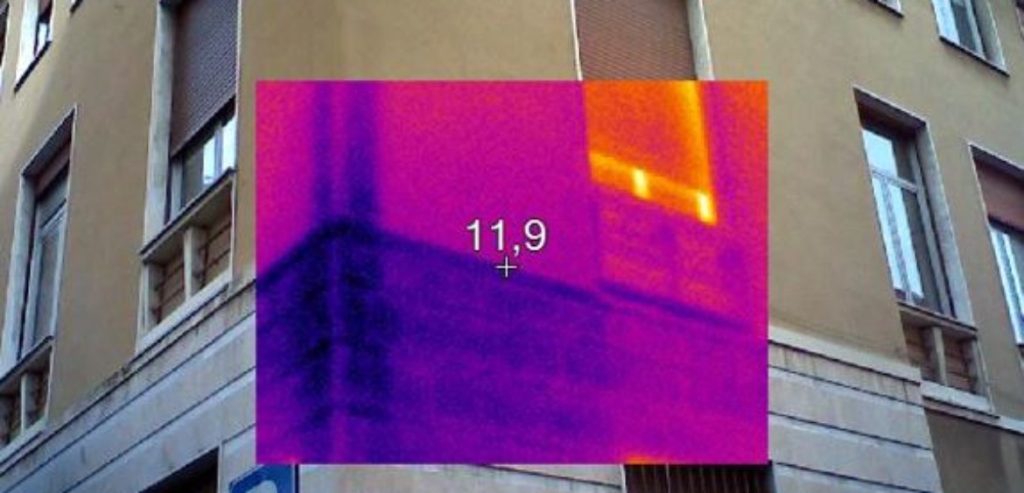
Thermal bridges
Closure of thermal bridges such as window and door eaves, terraces, and under eaves.

Interior insulation
Interior insulation where the thickness would impair room size and force construction and electrical work.

Historical buildings
Facades of historic buildings that cannot be altered due to the presence of raised friezes.

INDUSTRY
Industrial and agricultural warehouses, silos, etc. where it is necessary to thermally insulate and waterproof with a low thickness roofing and surfaces of different materials (metal, plastic, stone and others)
How does Manti Ceramic microcoat work?
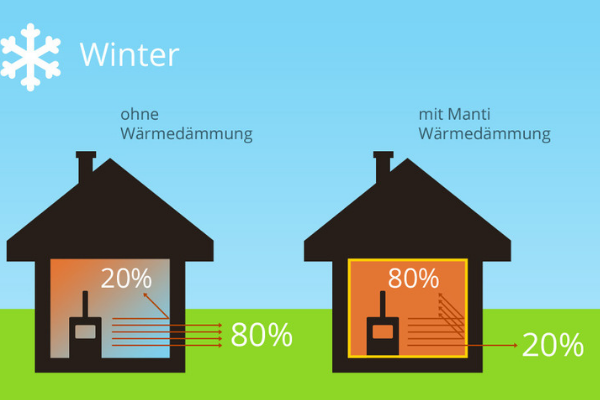
IN WINTER HEAT FLOWS FROM INSIDE TO OUTSIDE.
When Manti Ceramic is applied on the exterior, the thermal flow from the heating system slows down within the wall and then encounters strong resistance in the MANTI CERAMIC thermal coating, which reflects it. In this way, energy is transferred to the wall structure.
The wall accumulates heat—this “battery effect” hinders the transmission of heat to the outside and creates a pleasant sensation indoors.
In our experience, a feeling of comfort can be achieved even at indoor temperatures of 16°–17°C.
If Manti Ceramic is applied on the interior, the heat flow is immediately blocked and remains inside the living space.
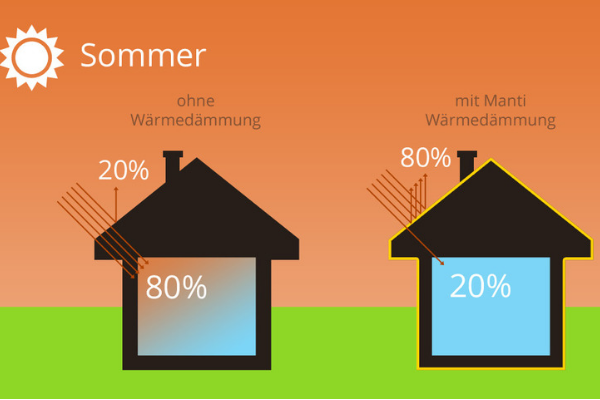
IN SUMMER THE HEAT FLOWS FROM THE OUTSIDE TO THE INSIDE.
When Manti Ceramic is applied externally, solar radiation hits the thermal coating first. About 85% of the wide spectrum of electromagnetic radiation cannot pass through MANTI® CERAMIC.
The remaining 15% is absorbed by the wall thanks to the slowing down of thermal flow.
If Manti Ceramic is applied on the interior, the heat from outside warms the wall but is blocked before entering the indoor environment.
Stop thermal bridges
Manti Ceramic microcoat to eliminate thermal bridges
A thermal bridge, also called a cold bridge, is an area or component of an object that has a higher thermal conductivity than surrounding materials, creating a path of least resistance for heat transfer. Thermal bridges result in an overall reduction in the thermal resistance of the object. The term is frequently discussed in the context of a building’s thermal envelope where thermal bridging leads to heat transfer into or out of the conditioned space. Thermal bridging in buildings can affect the amount of energy required to heat and cool a space, cause condensation (humidity) within the building envelope, and cause thermal discomfort. With MANTI CERAMIC you can forget about the thermal bridge, because thanks to its thin layer it is possible to apply it anywhere.