
Building insulation materials comparison: How to compare two insulation materials correctly – the 8 criteria that really matter
Summary:
When carrying out a building insulation materials comparison, the first value people usually look at is the thermal conductivity (λ). While this is certainly an important parameter, it is not enough to determine which solution is best suited to a specific building. Certifications, fire performance, water vapour permeability, application method, intended use, durability, and compatibility with the building substrate are equally important. Evaluating all these aspects together leads to a more informed choice of the most suitable insulation system.
Contents
- Why the λ-value alone is not enough
- The 8 criteria for a proper building insulation materials comparison
- Comparative overview of the main insulation technologies
- Every building requires a different solution
- Case study: the example of Manti Ceramic
- FAQ
- Contact us
Why the λ-value alone is not enough in a building insulation materials comparison
A building insulation materials comparison is often reduced to a simple comparison of thermal conductivity (λ). This is a common mistake.
Thermal conductivity measures how easily heat passes through a material by conduction, but it represents only one aspect of the actual performance of an insulation system.
In real construction projects, many additional factors influence the final result, including:
- the type of building;
- the presence of thermal bridges;
- the available installation thickness;
- moisture behaviour;
- fire safety requirements;
- durability;
- installation quality.
For this reason, a proper building insulation materials comparison should always consider several technical parameters rather than relying on a single numerical value.
The 8 criteria that really matter in a building insulation materials comparison
1. Thermal conductivity (λ)
This is the best-known parameter.
It indicates how effectively a material resists heat transfer by conduction. It is a fundamental value, but by itself it cannot determine which insulation solution is the most suitable for a particular project.
2. Certifications
Independent certifications provide confidence to designers, contractors and building owners.
They verify that the declared performances have been measured according to recognised testing procedures and that the product complies with established quality standards.
3. Fire performance
Reaction to fire is becoming increasingly important.
Depending on the building type and applicable regulations, fire classification may significantly influence the choice of insulation material.
4. Water vapour permeability
An insulation material should also be evaluated according to its behaviour towards water vapour.
Appropriate vapour permeability can help maintain the moisture balance of the wall, reducing the risk of surface condensation and mould growth.
5. Application method
Even an excellent insulation material may fail to deliver the expected performance if it is not installed correctly.
Application complexity, substrate preparation, required accessories and continuity of the insulation layer all have a direct impact on the final result.
6. Intended application
The choice of insulation should always reflect the intended use, for example:
- external insulation systems;
- internal insulation;
- roofs;
- thermal bridge correction;
- historic buildings;
- industrial surfaces;
- projects with limited available thickness.
7. Durability
Thermal performance should remain stable over time.
For this reason, it is important to evaluate mechanical resistance, dimensional stability, compatibility with the substrate and the ability to maintain performance throughout the building’s service life.
8. Indoor health and safety
Indoor comfort also deserves careful consideration.
VOC emissions, non-toxicity, moisture behaviour and compatibility with masonry can all influence indoor environmental quality.
Building insulation materials comparison
| Characteristic | EPS/XPS | Rock wool / Glass wool | Cork / Wood fibre | Manti Ceramic |
|---|---|---|---|---|
| Thermal conductivity (λ) | 0,031–0,040 W/mK | 0,034–0,042 W/mK | 0,038–0,045 W/mK | 0,0010–0,0020 W/mK |
| Typical required thickness | 10–16 cm | 10–16 cm | 12–18 cm | 1–10 mm |
| Additional structural work | Usually required | Usually required | Usually required | Minimal |
| Thermal bridge correction | More complex | More complex | More complex | Easier thanks to the reduced thickness |
| Internal applications with limited space | Limited | Limited | Limited | Suitable |
| Historic or heritage buildings | Not accepted | Not accepted | Not accepted | Generally Accepted |
| Application time | High | High | High | Low; applied like a technical skim coat |
| Need to assess installation quality and certifications | Always | Always | Always | Always |
| Operating principle | Resistance to heat conduction | Resistance to heat conduction | Resistance to heat conduction | Thermal reflectance and nanotechnology-based insulating mechanisms |
| Durability | Performance may deteriorate over time and can be sensitive to impact and weather exposure. | Performance may deteriorate over time and can be sensitive to impact and weather exposure. | Performance may deteriorate over time and can be sensitive to impact and weather exposure. | High. Backed by a 15-year warranty and designed for long-term durability. |
Every building requires a different solution: that why a correct Building insulation materials comparison is so important
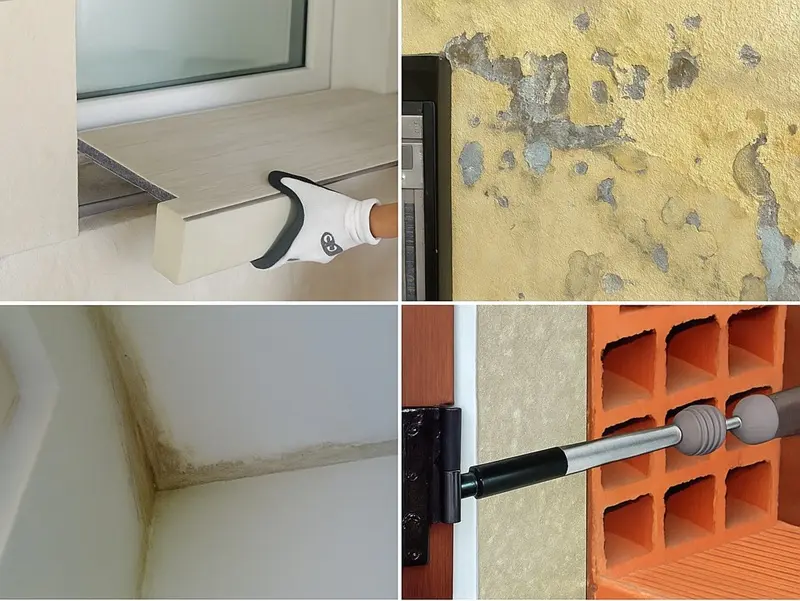
Different building conditions require different insulation solutions. Thermal bridges, moisture damage, mould and substrate characteristics should all be considered when comparing insulation materials.
There is no universally “best” insulation material.
Each project presents its own technical constraints.
Historic buildings, apartments, industrial facilities, commercial buildings and renovations all require different approaches.
This is why a building insulation materials comparison based solely on thermal conductivity may lead to inappropriate design decisions.
A comprehensive technical evaluation should always include all the performance characteristics that influence the long-term effectiveness of the insulation system.
Case study: applying these criteria to Manti Ceramic
The same evaluation principles can be applied when assessing nanotechnology-based insulation systems.
Rather than focusing exclusively on λ, it is advisable to examine the complete technical documentation, including:
- certified thermal conductivity;
- certified Solar Reflectance Index (SRI);
- fire classification;
- water vapour permeability;
- water permeability;
- VOC emissions;
- application thickness;
- installation procedures;
- intended applications;
- durability;
- manufacturer certifications;
- warranty conditions.
Manti Ceramic has been developed specifically to provide insulation where conventional thick insulation systems cannot be easily installed, such as thermal bridges, historic buildings, architectural details and projects with limited available thickness. The product range includes different versions designed for masonry, industrial surfaces and specialised applications, allowing the insulation solution to be selected according to the specific technical requirements of each project. Technical characteristics such as certified thermal conductivity, high Solar Reflectance Index (SRI), low VOC emissions, vapour permeability and fire performance should all be considered together during product evaluation, rather than relying on a single performance indicator.
View Manti Ceramic Certifications and DoPCs
Frequently Asked Questions – Building insulation materials comparison
Is thermal conductivity (λ) the only parameter to compare insulation materials?
No. Thermal conductivity is fundamental, but certifications, fire behaviour, vapour permeability, durability, installation method and intended application are equally important.
Why is vapour permeability important?
It helps maintain the moisture balance of the wall and may reduce the risk of condensation and mould formation.
Does the installation method affect insulation performance?
Yes. Incorrect installation can significantly reduce the effectiveness of even high-performance insulation materials.
Is there one insulation material suitable for every project?
Depending on the specific characteristics of the building, the most suitable solution may be either a complete nanotechnology-based insulation system or a hybrid approach combining a traditional insulation system with a thin-layer nanotechnology insulation coating.
Contact us
For more information about Manti Ceramic and low-thickness thermal insulation solutions, contact Savenergy.it at info@manti-ceramic.com or visit our Linkedin page https://www.linkedin.com/company/savenergy-it-srl-holding/for technical documentation, application guides and product information.

Author: Eng. Elena Galeotti
Date: 09/07/2026


