
Why Manti Ceramic Is Suitable for Historic Building Insulation: The Case of Religious Buildings
Why Manti Ceramic Is Suitable for Historic Building Insulation: The Case of Religious Buildings
Opening summary
Manti Ceramic for Historic buildings is a relevant topic whenever insulation must be applied on valuable masonry with reduced thickness and careful attention to hygrothermal behavior. This is especially important in historic religious buildings, which are among the most common examples of heritage construction in Italy. In a hygrothermal assessment carried out by CMR Center Materials Research, the Manti Ceramic system showed a gradual reduction in hygrometric values in the treated sample, both internally and externally.
Contents
- Why moisture is a critical issue in historic buildings
- What the CMR test says about Manti Ceramic
- Why this result is especially useful in religious buildings
- When low-thickness insulation is suitable for historic masonry
- What to assess before application on protected buildings
- Which Manti Ceramic versions are suitable for historic buildings
Why moisture is a critical issue in historic buildings
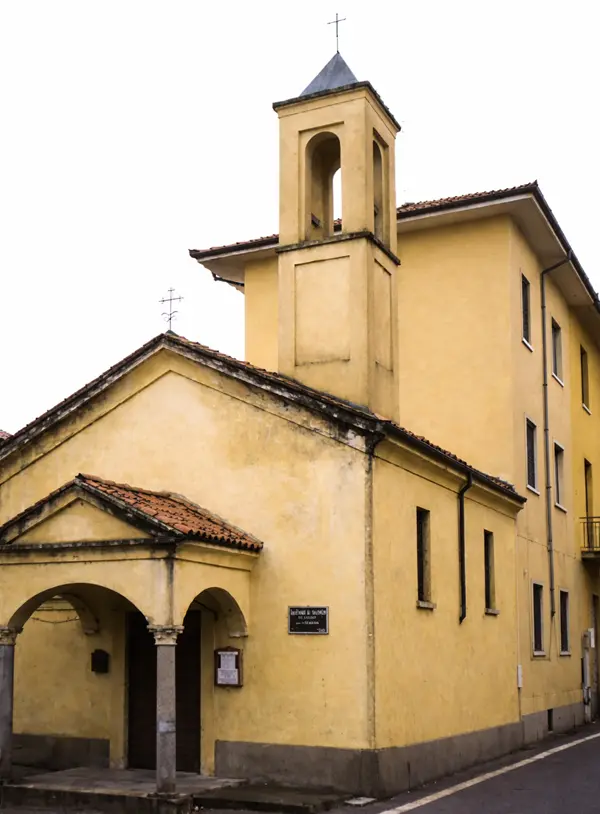
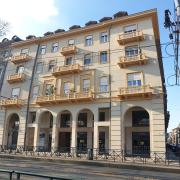
Historic place of worship: an example of a building where low thickness can be useful for working on the walls without altering the architectural balance.
When discussing Manti Ceramic for the insulation of Historic buildings, the starting point is a practical issue: in heritage construction, heat loss is not the only concern. It is also essential to consider how the masonry reacts to moisture and to changing hygrothermal conditions.
Historic buildings often feature thick walls, irregular surfaces, architectural details that must be preserved, and strong limitations on the thickness that can be added. Religious buildings are one of the clearest examples. Churches, monasteries, chapels, parish buildings and related spaces are a significant part of the historic built heritage and often include large interior volumes, intermittent heating use and cold surfaces.
When these conditions occur together, managing surface moisture and masonry behavior becomes a technical priority. For this reason, when evaluating an insulation system, it is useful to consider not only thermal performance but also hygrometric behavior.
What the CMR test says about Manti Ceramic and how it works on historic buildings
To better understand Manti Ceramic for thermal insulation of Historic buildings, it is useful to refer to the hygrothermal assessment carried out by CMR Center Materials Research. The test was performed on four sample buildings, all with the same solar exposure and comparable envelope conditions:
- one without insulation
- one insulated with Manti Ceramic on internal surfaces only
- one insulated with Manti Ceramic on both internal and external surfaces
- one insulated externally with 6 cm EPS
Sensors recorded air temperature, relative humidity and surface temperature.
The most relevant result concerns internal relative humidity. According to the CMR test, the buildings treated with Manti Ceramic, both in the internal-only solution and in the in-and-out solution, showed better moisture dissipation than the EPS sample. The hygrometric values in the masonry also showed a slow and progressive decrease over time.
This aspect is particularly relevant when dealing with historic masonry, where moisture management is often as important as thermal correction.
Why this result is especially useful in religious buildings
The topic of Manti Ceramic for Historic buildings becomes even more concrete when religious buildings are considered as a typical case of historic heritage. In these buildings, the challenge is rarely just “to insulate”. The real issue is how to intervene without altering geometries, decorative elements, reveals, jambs, large surfaces and often delicate construction details.
In addition, intermittent heating systems and great internal heights can increase surface imbalances and hygrometric criticalities. For this reason, a low-thickness insulation system that is associated with a progressive reduction in hygrometric values may be particularly useful in helping to preserve the building.
This is one of the reasons why Manti Ceramic may be suitable for many historic buildings, and especially for religious buildings: not only because of its low thickness, but also because the measured behavior suggests a favorable interaction with internal relative humidity within the envelope. This remains a technical aspect to be assessed case by case, not an automatic solution valid for every building.
When low-thickness insulation is suitable for historic masonry
Within the topic of Manti Ceramic for Historic buildings, low thickness remains a decisive criterion. In historic construction, it is not always possible to use traditional systems that require several centimeters of material and involve modifications to cornices, moldings, connections, thresholds, reveals or decorated surfaces.
A low-thickness system can therefore be useful when the intervention must remain more compatible with the existing geometry and have a lower visual and physical impact on the building fabric. Manti Ceramic, in its semi-liquid Media Density version, can be applied at around 1–2 mm by roller or spray and may be particularly useful on thermal bridges created by decorative elements, reliefs and complex geometries.
This can apply to valuable internal walls, surfaces affected by thermal bridges, masonry with reduced space availability, rooms with architectural details that must be preserved, and religious buildings where the conservation of proportions and surfaces is part of the building’s value.
What to assess before application of Manti Ceramic on protected, historic buildings
Before any choice is made, it is important to assess the type of substrate, the possible presence of salts, rising damp, ventilation conditions, the actual use of the building, existing finishes and conservation restrictions.
It is equally important to distinguish between different technical goals:
- thermal insulation
- thermal bridge correction
- reduction of surface condensation
- remediation of masonry affected by other causes of deterioration
Savenergy.it offers low-thickness thermal insulation solutions designed to balance performance, substrate compatibility and attention to masonry behavior over time.
Which Manti Ceramic versions are suitable for historic buildings
Manti Ceramic High Density
Manti Ceramic High Density is suitable where a thicker low-thickness system is needed on masonry surfaces, both internal and external.
Main technical data:
- certified thermal conductivity: λd = 0.0010 W/mK (view the data sheet for Technical recommendations for Application Thermal Calculations)
- recommended thickness: 2–10 mm
- SRI: 109
- fire reaction: Euroclass A2 s1 d0
Manti Ceramic Media Density
Manti Ceramic Media Density is especially suitable where reduced thickness is essential, such as on decorative details, thermal bridges and complex surfaces.
Main technical data:
- certified thermal conductivity: λd = 0.0010 W/mK
- recommended thickness: 1–2 mm
- SRI: 107
- fire reaction: Euroclass A2 s1 d0
In historic contexts, the result highlighted by the CMR report regarding the reduction of hygrometric values can be considered a useful technical element during the evaluation phase.
FAQ about Manti Ceramic for the insulation of Historic Buildings
Is Manti Ceramic suitable for historic buildings?
It is suitable thanks to low thickness, compatibility with valuable surfaces and attention to the hygrothermal behavior of masonry are required.
Why are religious buildings an important case when discussing Manti Ceramic Historic buildings?
Because many religious buildings belong to the historic built heritage and often have thick masonry, delicate surfaces, large interior volumes and strict thickness limitations.
When is low-thickness insulation useful on historic masonry?
It is particularly useful where traditional insulation would interfere with decorative details, proportions, reveals, thresholds or valuable internal and external finishes.
Can Manti Ceramic help in buildings with moisture-related issues?
It can be useful in cases where the interaction between insulation and masonry moisture behavior is a relevant factor. This should always be verified according to the specific building conditions.
Conclusion
To assess whether Manti Ceramic is suitable for a historic building, Savenergy.it provides technical support to analyze masonry type, thickness limitations and application context.
For information: info@manti-ceramic.com
To explore more applications and practical case studies, you can visit our LinkedIn https://www.linkedin.com/company/savenergy-it-srl-holding/
Eng. Elena Galeotti
April 19, 2026



Leave a Reply
Want to join the discussion?Feel free to contribute!