
Thermal Insulation and Sustainability: How to Choose Eco-Friendly and Efficient Materials
In recent years, sustainability in construction has become a central topic, driven by new European regulations on Green Homes and a growing environmental awareness. One of the most relevant aspects of improving a building’s energy efficiency is thermal insulation. But how do you choose insulating materials that are both effective and environmentally sustainable? Let’s explore the best solutions for eco-friendly thermal insulation.
The Importance of Thermal Insulation for Energy Efficiency
Good thermal insulation helps reduce heat loss in winter and heat entry in summer, ensuring:
- Lower energy consumption for heating and cooling;
- Reduction of CO₂ emissions;
- Greater living comfort;
- Increased property value.
Traditional Insulating Materials vs. Nanotechnology
Traditional insulating materials, such as expanded polystyrene (EPS) and rock wool, are widely used but have some limitations:
- They require significant thicknesses to ensure good insulation;
- They are often difficult to dispose of and not very sustainable;
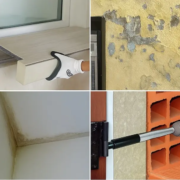
- They can alter the aesthetics of buildings, making application in historic contexts difficult.
By contrast, nanotechnology applied to thermal insulation, such as the Manti Ceramic nanotechnological microcoating, offers numerous advantages:
- Low thickness: it guarantees the same insulating performance as a traditional coating but with only a few millimeters of thickness;
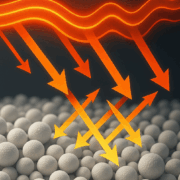
- High thermal reflectance: it blocks external heat in summer and retains internal heat in winter;
- Non-toxic and eco-friendly: a solvent-free product without harmful substances;
- Easy application: it can be applied with a spatula or Airless, reducing installation times.
How to Choose an Eco-Friendly Thermal Insulation?
To be considered eco-friendly, an insulating material must have certain fundamental characteristics:
- Low environmental impact: it must be made with non-toxic and recyclable materials;
- High energy efficiency: it must ensure excellent insulating performance to reduce consumption;
- Durability and resistance: it must maintain its properties over time without deteriorating;
- Environmental certifications: such as the EPD (Environmental Product Declaration) certification and compliance with European regulations.
Nanotechnological Insulation with Manti Ceramic
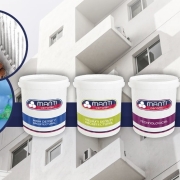
A concrete example of eco-friendly thermal insulation is Manti Ceramic, an innovative nanotechnological coating. Thanks to its composition with ceramic microspheres, this microcappotto provides high performance with minimal thickness, making it ideal for:
- Historic buildings where traditional coatings cannot be applied;
- Renovations where space is limited;
- Challenging surfaces, such as balconies and terraces.

Example of a house built with eco-friendly materials, including insulation
The best Eco-Friendly thermal insulation: Manti Ceramic
A concrete example of eco-friendly thermal insulation is Manti Ceramic, an innovative nanotechnological coating. Thanks to its composition with ceramic microspheres, this microcappotto ensures high performance with minimal thickness, making it ideal for:
- Historic buildings where traditional coatings cannot be applied;
- Renovations where space is limited;
- Challenging surfaces, such as balconies and terraces.
Conclusions
Thermal insulation is a strategic choice for improving energy efficiency and reducing the environmental impact of buildings. Opting for nanotechnological solutions like Manti Ceramic ensures superior performance with a lower ecological footprint. For more information about nanotechnological products for thermal insulation, contact us at info@manti-ceramic.com.
Also, visit our linkedin page, where you will information about our nanotechnological insulation.






Leave a Reply
Want to join the discussion?Feel free to contribute!