
Manti Ceramic and EPD: how to evaluate a low-thickness nanotechnology insulation with environmental product documentation
Manti Ceramic and EPD: how to evaluate a low-thickness nanotechnology insulation with environmental product documentation
Summary
Manti Ceramic and EPD is a useful topic for designers, construction companies and technical professionals who need to evaluate thermal insulation solutions supported by environmental product documentation. An EPD, or Environmental Product Declaration, provides structured information on the environmental performance of a product throughout its life cycle, according to defined assessment rules and methods.
In construction, this type of documentation can be relevant for public and private projects, energy retrofits, building certifications and technical specifications requiring verifiable environmental data. Manti Ceramic is a low-thickness nanotechnology solution suitable for improving the thermal insulation of walls, ceilings, façades, thermal bridges and complex surfaces, with a less invasive application compared to traditional high-thickness systems.
Synthetic index
- What EPD means for construction products
- Why EPD is useful when evaluating thermal insulation
- How to connect Manti Ceramic and EPD to a specific project
- Which technical performances should support environmental documentation
- Where Manti Ceramic can be suitable in construction
- Common mistakes to avoid when choosing insulation with EPD
- FAQ
- Conclusion
What EPD means for construction products: Manti Ceramic and EPD
An EPD, or Environmental Product Declaration, is a document that communicates quantified environmental information about a product. In the construction sector, it allows materials to be assessed and compared on a more technical basis, within the conditions, categories and calculation rules that apply to each product type.
Speaking about Manti Ceramic and EPD means considering the product not only as a low-thickness thermal insulation solution, but also as a material supported by documentation that can be useful in projects requiring verifiable environmental data.
An EPD does not replace the technical evaluation of the product. However, it can help designers and technical professionals integrate environmental information into reports, specifications, building certifications or comparative assessments.
In construction, the choice of an insulation material should consider several factors: thermal performance, compatibility with the substrate, available thickness, durability, moisture behaviour, fire reaction, application conditions and available documentation. EPD adds a further level of information, especially when the project requires documentary traceability.
Why EPD is useful when evaluating thermal insulation
In a thermal insulation project, the main objective is usually to improve the energy performance of the building and indoor comfort. However, many current projects also require information about the environmental impact of the materials used. In this context, EPD can be useful because it provides organised and verifiable data.
A thermal insulation product should not be evaluated only by its thickness or by a single performance value. In the case of Manti Ceramic, the low thickness allows intervention in situations where traditional panel systems may be difficult to apply: interior walls with limited space, façades with architectural details, window reveals, pillars, ceilings, balconies, balcony undersides and construction joints affected by thermal bridges.
The presence of EPD can simplify the integration of the product into projects where more complete documentation is required. This does not mean that EPD is the only selection criterion. It is one useful tool within a broader technical evaluation.
How to connect Manti Ceramic and EPD to a specific project
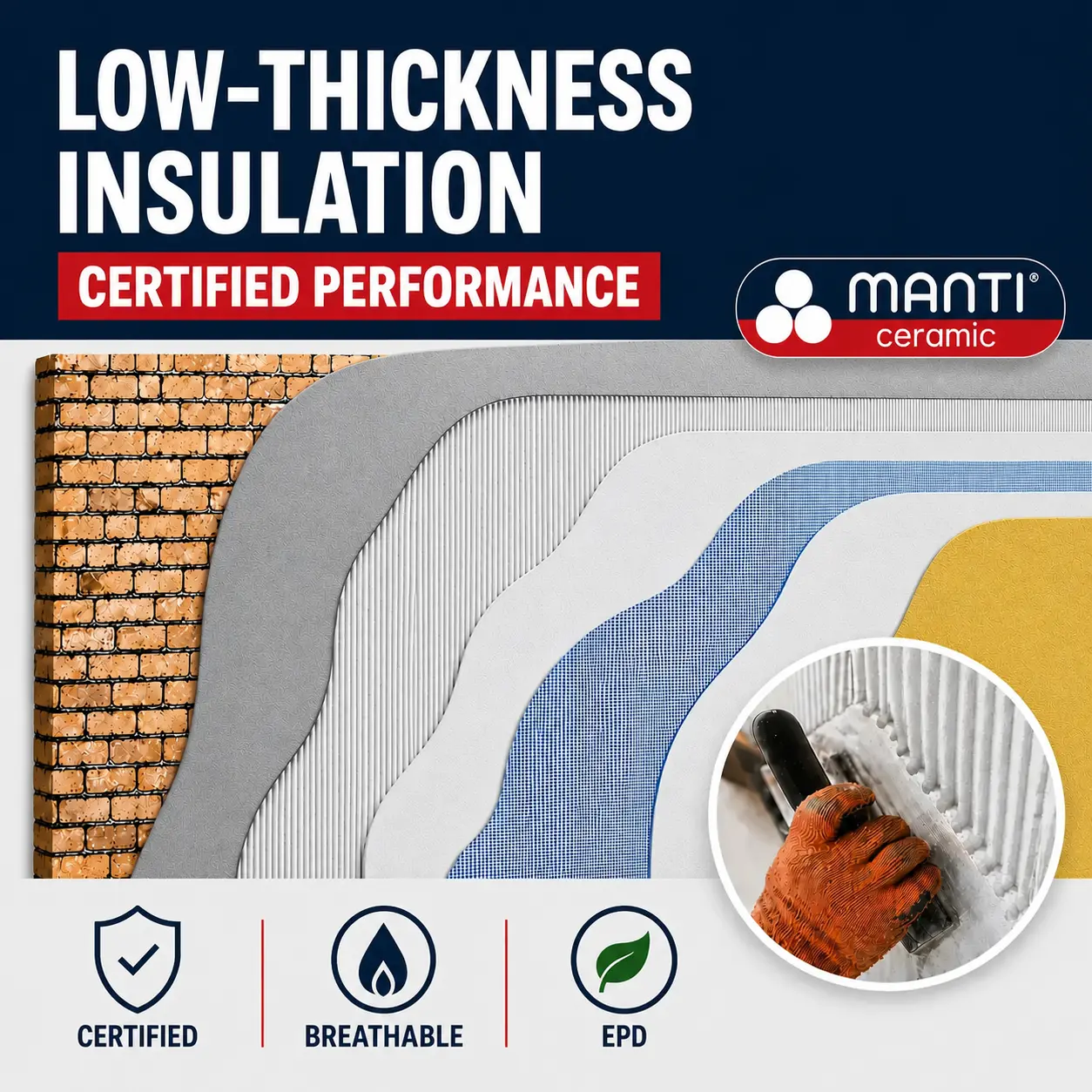
Manti Ceramic is a low-thickness nanotechnology insulation solution for construction, suitable for projects requiring certified performance, breathable properties and EPD-certified product documentation.
Manti Ceramic and EPD should always be assessed in relation to the specific function of the product within the building system. Treating a cold interior wall is different from working on an external façade, an industrial roof, a pillar affected by thermal bridging or a historical surface with decorative reliefs.
Manti Ceramic is available in different versions, each intended for specific applications. The High Density version is suitable for walls and building surfaces where a greater application thickness is required, while remaining within the concept of low-thickness insulation. Medium Density is suitable for vertical and horizontal surfaces, thermal bridge correction, ceilings, balconies, concrete structures and contexts where reduced thickness must be maintained.
Manti Ceramic Low Density Transparent can be evaluated for visible surfaces where it is important to preserve the appearance of the substrate. Manti Ceramic Technological M is suitable for industrial roofs and surfaces such as metal, wood, plastic, cement and concrete, where thermo-reflective and waterproofing properties are required.
Environmental documentation should always be connected to the specific product version and intended use. For this reason, in a technical project it is important to verify which EPD applies to the selected product, what data it includes and how that data should be interpreted within the construction system.
Which technical performances should support environmental documentation
An EPD provides environmental information, but the suitability of a product for a construction project also depends on its technical performance. In the case of low-thickness insulation, several data points should be considered: thermal conductivity, thermal or solar reflectance index, water vapour permeability, water resistance, fire reaction, VOC content, density, application thickness, drying times and substrate compatibility.
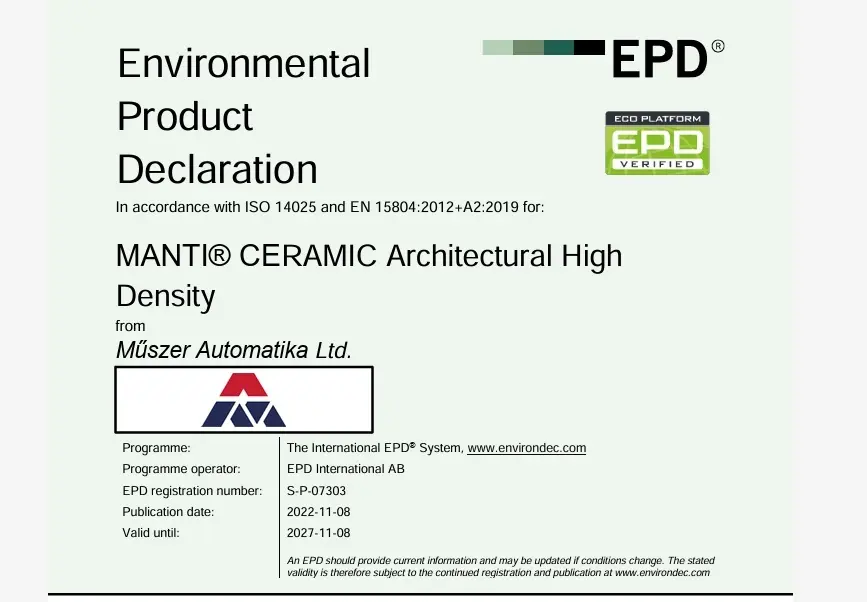
EPD certification for Manti Ceramic Architectural High Density: environmental product documentation supporting technical traceability in construction projects.
Manti Ceramic Medium Density and Manti Ceramic High Density are nanotechnology solutions for low-thickness thermal insulation. The presence of EPD for these versions can be a useful element in projects where materials with documented environmental information are valued.
In practice, the designer should assess three levels of information together:
- technical performance of the product;
- available environmental documentation;
- suitability of the application system for the substrate and building.
This approach avoids decisions based only on a label or a generic description. In construction, the effectiveness of an insulation product always depends on the correct relationship between material, surface, thickness, application cycle and project objective.
Where Manti Ceramic can be suitable in construction
Manti Ceramic can be suitable for energy retrofits, new buildings, indoor comfort improvement, thermal bridge correction and insulation of surfaces where available space is limited.
In residential buildings, it can be used on walls, ceilings and rooms with comfort issues. It is also suitable for areas with surface condensation and critical points where localised heat losses occur.
It can also be useful when a less invasive intervention is required, compatible with existing geometries and faster to apply compared to high-thickness systems. In historical buildings or façades with complex architectural details, it can be considered when mouldings, cornices, reliefs or architectural constraints make traditional panels difficult to install.
Manti Ceramic can also be applied to construction details such as window reveals, pillars, wall-floor junctions, balcony undersides, ceilings and interior surfaces with complex geometries. Its low thickness allows work on points where insulation continuity is difficult to achieve with conventional solutions.
FAQ about Manti Ceramic and EPD
What is an EPD?
An EPD, or Environmental Product Declaration, is a document that communicates quantified environmental information about a product, based on defined calculation rules and product categories.
Does Manti Ceramic have EPD documentation?
Yes. Manti Ceramic High Density and Manti Ceramic Medium Density are EPD certified. The certifications are published on www.manti-ceramic.com and on the manufacturer’s website, providing verifiable environmental product documentation for building and energy retrofit projects.
Does an EPD prove that a product is the best insulation material?
No. EPD provides environmental information, but the choice of an insulation product should also consider thermal performance, substrate, thickness, fire reaction, permeability, application method and real conditions of use. Manti Ceramic is supported by technical documentation for these parameters.
Why can Manti Ceramic be useful in energy retrofits?
It allows low-thickness intervention on surfaces where traditional systems can be invasive, such as walls, ceilings, pillars, balconies and complex façades.
Can Manti Ceramic help reduce condensation and mould?
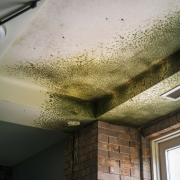
On cold walls and thermal bridges, an insulation treatment can improve surface temperature and help reduce condensation and mould conditions, while ventilation, indoor humidity and substrate condition must also be assessed.
Conclusion
Savenergy.it proposes solutions for low-thickness nanotechnology thermal insulation and surface rehabilitation in construction, with technical support in selecting the most suitable product for each application context.
For information about Manti Ceramic, technical documentation, EPD and possible applications in construction projects, write to info@manti-ceramic.com.
Ing. Elena Galeotti
May 4, 2026







Leave a Reply
Want to join the discussion?Feel free to contribute!