
How to Eliminate Thermal Bridges in Buildings with Nanotechnological Solutions
Eliminating thermal bridges is crucial to achieving optimal insulation and energy savings in costruction. In this business, energy efficiency is a key factor in ensuring comfort and reducing energy consumption. However, one of the most common problems in buildings is thermal bridges—specific areas where heat loss is more significant. To eliminate thermal bridges effectively, nanotechnological solutions represent an innovative and highly efficient alternative.
What Are Thermal Bridges and Why Is It Important to Eliminate Them?
Thermal bridges are points in a building’s structure where the continuity of thermal insulation is interrupted, allowing heat to pass through more quickly. This leads to several issues such as:
- Energy loss and increased heating and cooling consumption.
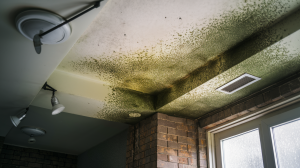
- Formation of condensation and mold, affecting indoor air quality.
- Reduced thermal comfort, with unstable indoor temperatures.
To eliminate thermal bridges, it is essential to use high-insulation materials that adapt to critical areas of the building without requiring structural modifications.
Traditional Solutions for Eliminating Thermal Bridges
There are several conventional solutions to minimize the impact of thermal bridges, although many of them have limitations:
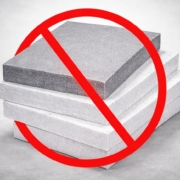
- Insulating panels: require additional space and may alter the building’s aesthetics.
- Thermal plasters: while they provide some insulation, their effectiveness is limited in specific areas.
- Vapor barriers and sealing systems: help reduce condensation but do not completely prevent thermal transfer.
These options can be useful in some cases, but when a high-performance solution with reduced thickness is needed, nanotechnological solutions offer a superior alternative.
Eliminating Thermal Bridges with Nanotechnological Solutions
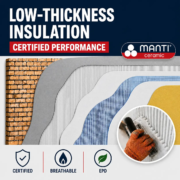
Advances in nanotechnology have led to the development of innovative products that optimize thermal insulation without the need for major interventions. One example is Manti Ceramic High Density and Medium Density, coatings that, when applied in thin layers, create an effective thermal barrier.
Why Choose Nanotechnology?
- Low thickness: allows application in critical areas without modifying the building structure.
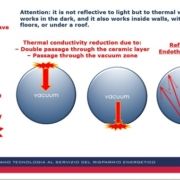
- High thermal efficiency: blocks heat transfer thanks to its composition of ceramic nanomolecules.
- Impermeability and breathability: prevents the formation of condensation and mold.
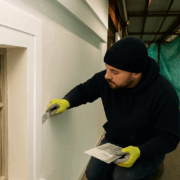
- Easy application: Manti Ceramic High Density is applied with a trowel, while Manti Ceramic Medium Density, due to its semi-liquid texture, can be applied with a roller, brush, or Airless sprayer, ensuring uniform coverage.
Applications of Manti Ceramic High Density and Medium Density for correcting Thermal Bridges
These products are ideal for correcting thermal bridges in:
- Window and door frames, where structural joints facilitate heat leakage.
- Pillars and beams, structural elements where materials create insulation discontinuities.
- Floors and ceilings, especially in areas exposed to the exterior or unheated spaces.
- Friezes and decorations of historic buildings, where Manti Ceramic Medium Density, thanks to its semi-liquid texture, allows precise application with Airless sprayer, roller, or brush without altering the building’s aesthetics.
Conclusion
Eliminating thermal bridges is essential for improving energy efficiency and comfort in buildings. While traditional solutions can be effective in some cases, nanotechnology offers a more advanced alternative, delivering better results with simpler application. Products like Manti Ceramic High Density and Medium Density represent a revolution in thermal insulation, allowing problems to be solved without invasive modifications.
For more information about this innovative solution, contact us at info@manti-ceramic.com. Additionally, visit our linkedin page, where you can watch demonstration videos on product application and learn more about the benefits of nanotechnological insulation.




Leave a Reply
Want to join the discussion?Feel free to contribute!