
Manti Ceramic and EPD is a useful topic for designers, construction companies and technical professionals who need to evaluate thermal insulation solutions supported by environmental product documentation. An EPD, or Environmental Product Declaration, provides structured information on the environmental performance of a product throughout its life cycle, according to defined assessment rules and methods.
In construction, this type of documentation can be relevant for public and private projects, energy retrofits, building certifications and technical specifications requiring verifiable environmental data. Manti Ceramic is a low-thickness nanotechnology solution suitable for improving the thermal insulation of walls, ceilings, façades, thermal bridges and complex surfaces, with a less invasive application compared to traditional high-thickness systems.
An EPD, or Environmental Product Declaration, is a document that communicates quantified environmental information about a product. In the construction sector, it allows materials to be assessed and compared on a more technical basis, within the conditions, categories and calculation rules that apply to each product type.
Speaking about Manti Ceramic and EPD means considering the product not only as a low-thickness thermal insulation solution, but also as a material supported by documentation that can be useful in projects requiring verifiable environmental data.
An EPD does not replace the technical evaluation of the product. However, it can help designers and technical professionals integrate environmental information into reports, specifications, building certifications or comparative assessments.
In construction, the choice of an insulation material should consider several factors: thermal performance, compatibility with the substrate, available thickness, durability, moisture behaviour, fire reaction, application conditions and available documentation. EPD adds a further level of information, especially when the project requires documentary traceability.
In a thermal insulation project, the main objective is usually to improve the energy performance of the building and indoor comfort. However, many current projects also require information about the environmental impact of the materials used. In this context, EPD can be useful because it provides organised and verifiable data.
A thermal insulation product should not be evaluated only by its thickness or by a single performance value. In the case of Manti Ceramic, the low thickness allows intervention in situations where traditional panel systems may be difficult to apply: interior walls with limited space, façades with architectural details, window reveals, pillars, ceilings, balconies, balcony undersides and construction joints affected by thermal bridges.
The presence of EPD can simplify the integration of the product into projects where more complete documentation is required. This does not mean that EPD is the only selection criterion. It is one useful tool within a broader technical evaluation.
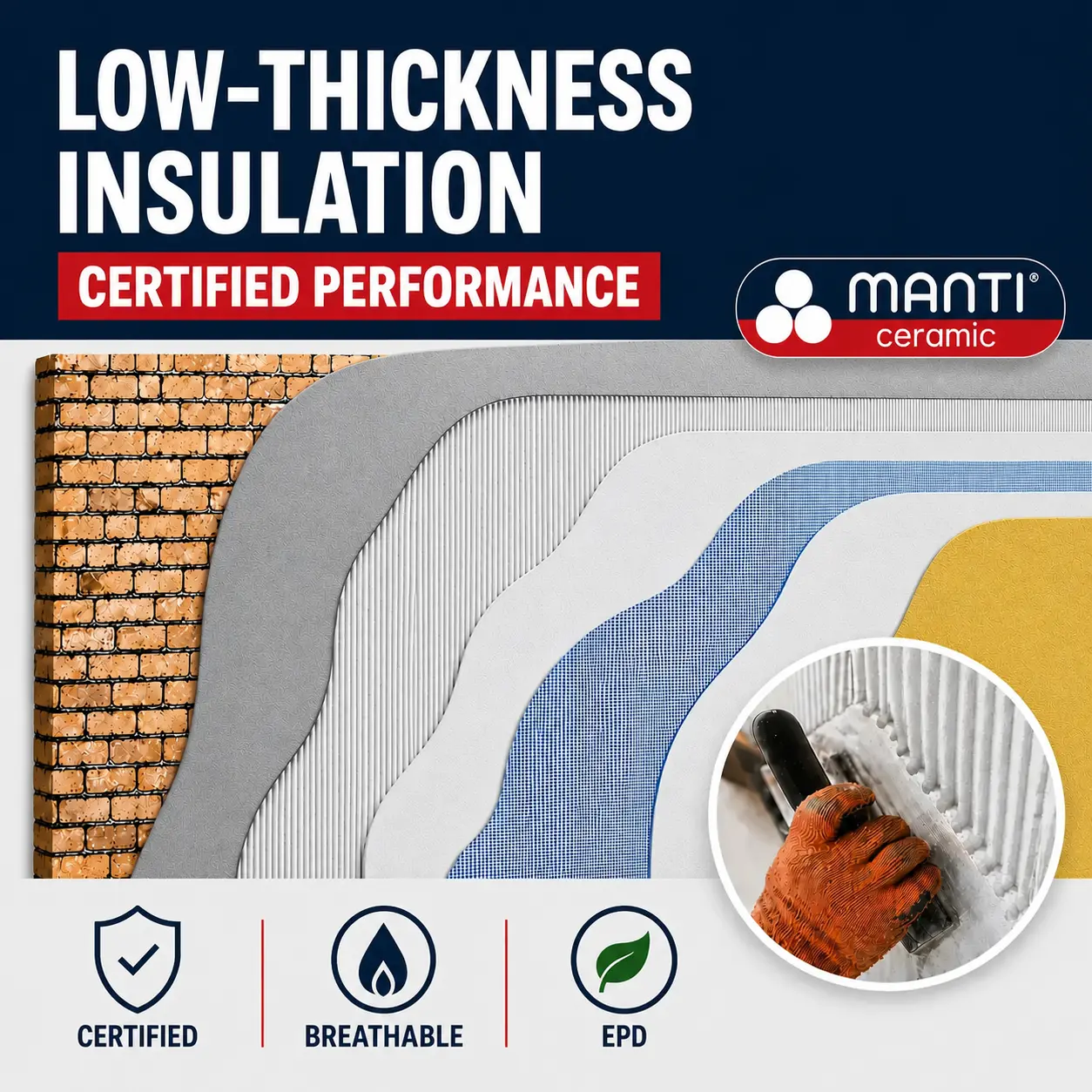
Manti Ceramic is a low-thickness nanotechnology insulation solution for construction, suitable for projects requiring certified performance, breathable properties and EPD-certified product documentation.
Manti Ceramic and EPD should always be assessed in relation to the specific function of the product within the building system. Treating a cold interior wall is different from working on an external façade, an industrial roof, a pillar affected by thermal bridging or a historical surface with decorative reliefs.
Manti Ceramic is available in different versions, each intended for specific applications. The High Density version is suitable for walls and building surfaces where a greater application thickness is required, while remaining within the concept of low-thickness insulation. Medium Density is suitable for vertical and horizontal surfaces, thermal bridge correction, ceilings, balconies, concrete structures and contexts where reduced thickness must be maintained.
Manti Ceramic Low Density Transparent can be evaluated for visible surfaces where it is important to preserve the appearance of the substrate. Manti Ceramic Technological M is suitable for industrial roofs and surfaces such as metal, wood, plastic, cement and concrete, where thermo-reflective and waterproofing properties are required.
Environmental documentation should always be connected to the specific product version and intended use. For this reason, in a technical project it is important to verify which EPD applies to the selected product, what data it includes and how that data should be interpreted within the construction system.
An EPD provides environmental information, but the suitability of a product for a construction project also depends on its technical performance. In the case of low-thickness insulation, several data points should be considered: thermal conductivity, thermal or solar reflectance index, water vapour permeability, water resistance, fire reaction, VOC content, density, application thickness, drying times and substrate compatibility.
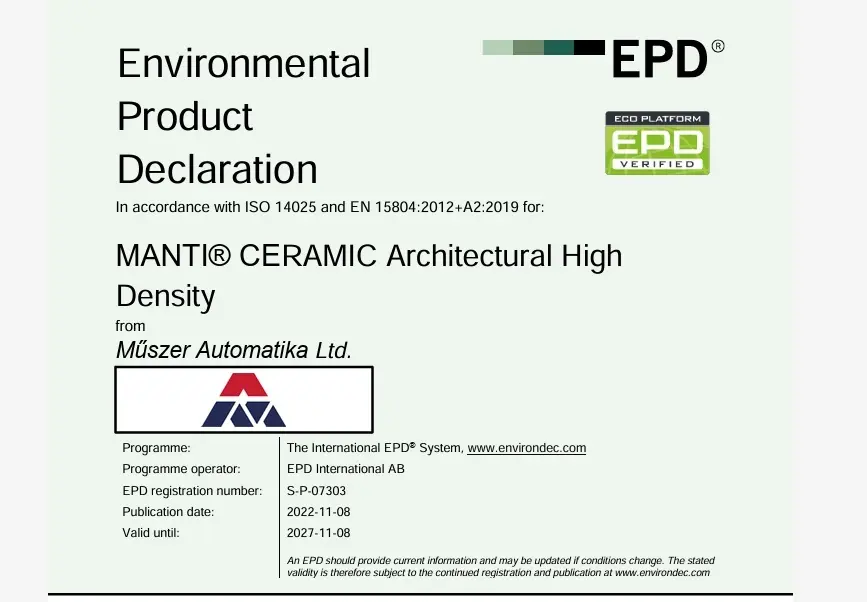
EPD certification for Manti Ceramic Architectural High Density: environmental product documentation supporting technical traceability in construction projects.
Manti Ceramic Medium Density and Manti Ceramic High Density are nanotechnology solutions for low-thickness thermal insulation. The presence of EPD for these versions can be a useful element in projects where materials with documented environmental information are valued.
In practice, the designer should assess three levels of information together:
This approach avoids decisions based only on a label or a generic description. In construction, the effectiveness of an insulation product always depends on the correct relationship between material, surface, thickness, application cycle and project objective.
Manti Ceramic can be suitable for energy retrofits, new buildings, indoor comfort improvement, thermal bridge correction and insulation of surfaces where available space is limited.
In residential buildings, it can be used on walls, ceilings and rooms with comfort issues. It is also suitable for areas with surface condensation and critical points where localised heat losses occur.
It can also be useful when a less invasive intervention is required, compatible with existing geometries and faster to apply compared to high-thickness systems. In historical buildings or façades with complex architectural details, it can be considered when mouldings, cornices, reliefs or architectural constraints make traditional panels difficult to install.
Manti Ceramic can also be applied to construction details such as window reveals, pillars, wall-floor junctions, balcony undersides, ceilings and interior surfaces with complex geometries. Its low thickness allows work on points where insulation continuity is difficult to achieve with conventional solutions.
An EPD, or Environmental Product Declaration, is a document that communicates quantified environmental information about a product, based on defined calculation rules and product categories.
Yes. Manti Ceramic High Density and Manti Ceramic Medium Density are EPD certified. The certifications are published on www.manti-ceramic.com and on the manufacturer’s website, providing verifiable environmental product documentation for building and energy retrofit projects.
No. EPD provides environmental information, but the choice of an insulation product should also consider thermal performance, substrate, thickness, fire reaction, permeability, application method and real conditions of use. Manti Ceramic is supported by technical documentation for these parameters.
It allows low-thickness intervention on surfaces where traditional systems can be invasive, such as walls, ceilings, pillars, balconies and complex façades.
On cold walls and thermal bridges, an insulation treatment can improve surface temperature and help reduce condensation and mould conditions, while ventilation, indoor humidity and substrate condition must also be assessed.
Savenergy.it proposes solutions for low-thickness nanotechnology thermal insulation and surface rehabilitation in construction, with technical support in selecting the most suitable product for each application context.
For information about Manti Ceramic, technical documentation, EPD and possible applications in construction projects, write to info@manti-ceramic.com.
Ing. Elena Galeotti
May 4, 2026

In recent years, the construction industry has undergone a major transformation thanks to the introduction of nanocoats—ultra-thin insulation solutions based on cutting-edge nanotechnology. But a new revolution is emerging: the smart nanocoat.
This new generation of coatings doesn’t just insulate—it interacts with the environment, adapts to changes, communicates, and optimizes its performance in real time through environmental sensors, adaptive materials, and artificial intelligence.
The smart nanocoat is the natural evolution of existing nano-insulation systems such as Manti Ceramic. While today we can insulate a wall with just a few millimeters of material, tomorrow we’ll do it with self-regulating materials that respond to temperature, humidity, sunlight, and weather conditions.
Research labs are already developing:
Thermochromic materials that change reflectance with light;
Self-healing coatings that repair microcracks autonomously;
Systems with integrated sensors that monitor performance and send data to centralized energy management systems.
In the near future, the smart nanocoat will:
Actively insulate, adjusting its function based on real-time environmental data;
Communicate with building automation systems;
Prevent structural damage through continuous monitoring;
Integrate into predictive maintenance plans, lowering costs and energy consumption.
This will keep indoor comfort consistent year-round, with minimal environmental impact and unmatched efficiency.
Savenergy.it’s nanocoats already represent the pinnacle of nano-insulation technology. But innovation doesn’t stop here. Choosing the right solution today means investing in performance, durability, and long-term sustainability.
Follow our linkedin page: https://www.linkedin.com/company/savenergy-it-srl-holding/
✉️ For any further information request , write us to the following email adress: info@manti-ceramic.com
If you prefer, you can call us at: +39 344/1680160
In recent years, thermal insulation has become a central element in any energy renovation project. However, one of the biggest challenges is the bulky thickness of traditional insulating materials. That’s why the most innovative and high-performing solution today is thin thermal insulation.
This technology, based on ceramic nanotechnology, offers excellent thermal performance with just a few millimeters of application. It’s a true revolution: it avoids invasive construction work, maintains the original aesthetics, and delivers comparable—if not superior—results to thick conventional systems.
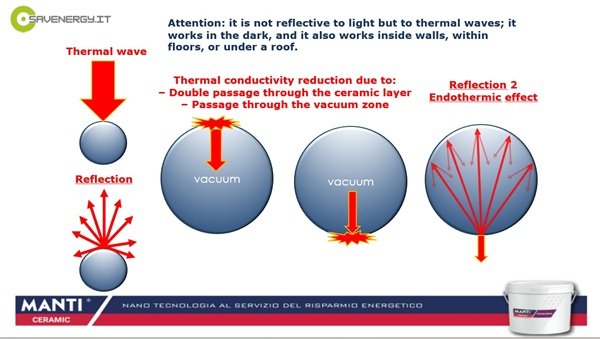
The core of thin thermal insulation lies in the use of vacuum-sealed ceramic microspheres embedded in a nanocomposite matrix. These microspheres:
In addition, these materials are non-toxic, eco-friendly, fire-resistant, and 100% recyclable.
👉 Discover more on our website
Thin thermal insulation can be applied to:
Application is quick and easy: with a spatula or airless spray in three coats. Installation times are reduced, and performance is guaranteed—without needing to modify window sills, drainpipes, or balcony structures as with traditional systems.
Here’s a direct comparison:
| Type | Thickness | Thermal conductivity (W/mK) |
|---|---|---|
| Traditional insulation (EPS) | 12 cm | 0.031 |
| Manti Ceramic High Density | 8 mm | 0.002 |
And more: no cracks, no detachment, and minimal long-term maintenance.
Want to find out which version of Manti Ceramic best suits your project?
Write to us at info@manti-ceramic.com and we’ll help you choose the ideal solution.
📺 Also follow our linkedin page: https://www.linkedin.com/company/savenergy-it-srl-holding/ where you’ll find technical information, application tips, and case studies.
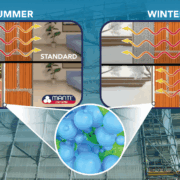
When we talk about thermal insulation, we often think only of thickness. However, insulation systems are based on very different physical principles. The nanocoating Manti Ceramic is not just a thinner solution — it’s a radical shift in how we manage heat flow.
Conventional insulation materials like EPS, XPS, rock wool, cork, or wood fiber work by thermal resistance. In essence, they do not stop heat, they slow it down, using their low conductivity (λ ≈ 0.031 – 0.040 W/mK).
To be effective, they require thicknesses from 8 to 16 cm, creating what’s known as thermal lag. While this may help in winter, in summer they accumulate heat during the day and release it in the evening – just when it’s least needed.
Moreover, traditional insulation:
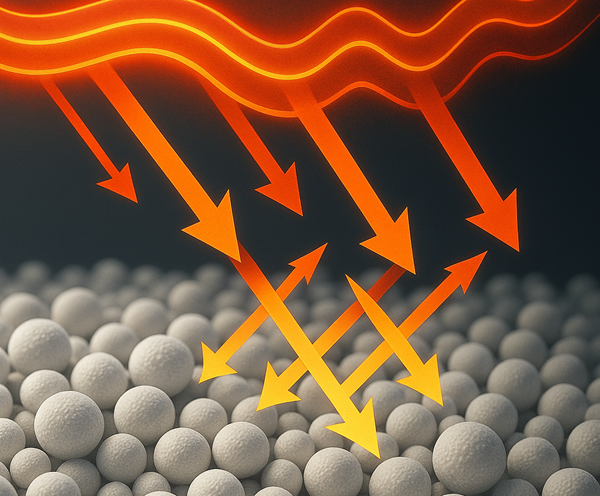
The nanocoating Manti Ceramic works completely differently: it creates a reflective thermal barrier. Rather than delaying heat, it blocks it thanks to:
👉 Result: high insulation performance with only 0.6 to 10 mm thickness, without structural changes.
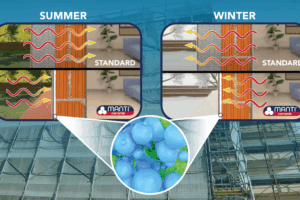
🔄 A direct comparison
| Feature | Traditional insulation | Manti Ceramic |
| Operating principle | Thermal resistance | Reflectivity + ultra-low λ |
| Required thickness | 8–16 cm | 0.6 – 10 mm |
| Summer efficiency | Limited | High |
| Thermal bridge correction | Complex | Excellent |
| Application type | Invasive | Quick and clean |
| Durability | Low | Very high |
| Risk of detachment | High | Very low |
| Material | EPS, XPS, rock wool, etc. | Nanoceramic composite |
Nanocoating Manti Ceramic was born in aerospace, naval and industrial sectors. Today, it is rapidly gaining ground in building construction due to:
📩 Want to know more about nanocoating Manti Ceramic?
Write to us at info@manti-ceramic.com to request more details or a technical consultation.
🎥 Follow also our linkedin page: https://www.linkedin.com/company/savenergy-it-srl-holding/ you’ll find demos, case studies, and deep dives into nanotechnology-based building insulation.

When it comes to innovative thermal insulation, nanocoating represents one of the most advanced technologies available on the market today. However, its use is often accompanied by theoretical and practical mistakes that compromise the expected results. In this article, we analyze the main misunderstandings, also relying on a certified thermographic report carried out in the province of Milan.
Mistake no. 1 – “Insulation depends on mass”
This is perhaps the most common one. The classic principle of thermal insulation is based on the idea that centimeters of material are needed to slow down heat transmission. But nanotechnology works differently: nanocoating blocks heat, it does not slow it down, thanks to reflection and the direct hindrance of thermal passage.
Mistake no. 2 – “It only works for heat”
On the contrary, a nanocoating works both in summer and winter. Its mechanism is bidirectional: it prevents heat from entering in the hot months and hinders its exit in the cold months.
Mistake no. 3 – “Thermal lag is needed”
The concept of thermal lag applies to traditional materials. A nanoinsulator does not accumulate heat; it repels it. Therefore, asking for thermal lag in a material such as Manti Ceramic is a misjudgment.
Mistake no. 4 – “Measuring effectiveness with heat fluxmetry”
Heat fluxmetry works well on massive materials but is inadequate for testing a nanocoating. This is because it works through reflection and not accumulation, and the results would be distorted.
An official thermographic report, carried out on a building in the province of Milan, compared the 8 mm thick Manti Ceramic with a 12 cm graphite EPS coating. The result? An average surface temperature difference of less than 0.4 °C between the two solutions.
This data, seemingly minimal, is actually extraordinary: it means that 8 mm of nanocoating provide equivalent performance to 12 cm of graphite EPS with conductivity λ = 0.031 W/mK. By making a simple mathematical ratio (0.031 / 15), it is confirmed that the effective λ of Manti Ceramic is around 0.002 W/mK.
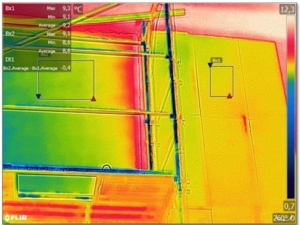
The image shows the thermography carried out during the report that compared the Manti Ceramic nanocoating with graphite EPS
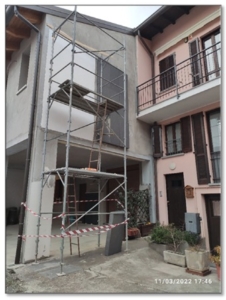
The wall on which 8 mm of Manti Ceramic nanocoating and 12 cm of graphite EPS were applied.
Thanks to these performances, the Manti Ceramic nanocoating represents a concrete and certified alternative to traditional coatings. It insulates better, takes up less space, and does not require invasive works.
Those who wish to make conscious choices must therefore rely not only on technical data sheets but also on certified tests, real-life experiences, and – above all – the correct interpretation of the physical properties of nanotechnology.
Nanocoating is not an additive paint. It is a complex, scientifically validated system that requires expertise to be understood and valued. Those who make mistakes in assessing it risk excluding one of the most efficient and sustainable technologies for building insulation.
📩 For more information on this topic or to request our complete thermographic report, write to us at:
📧info@manti-ceramic.com
📺 Visit and subscribe our Linkedin page https://www.linkedin.com/company/savenergy-it-srl-holding/ to discover new videos about nanotechnological insulation in construction.
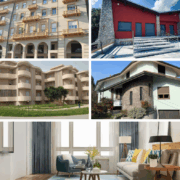
In the construction industry, the ability to intervene on complex or protected structures requires innovative solutions. Thanks to nanotechnology, the Manti Ceramic thermal coating ensures effective insulation even in conditions where traditional systems fall short.
With over 8,000 applications in Italy alone, Manti Ceramic stands out as the cutting-edge choice for those seeking high thermal performance with thicknesses ranging from just 1 to 10 mm.

One of the most appreciated applications of Manti is the correction of thermal bridges, particularly on:
Window jambs
Recesses and undersides of balconies
Areas inaccessible by traditional insulation systems
In these situations, Manti thermal coating is applied in synergy with traditional panels, greatly enhancing insulation continuity and reducing heat loss.
When architectural constraints or lack of space make traditional insulation impossible, Manti Ceramic becomes the perfect alternative. Its minimal thickness delivers high performance without altering the appearance of buildings.
More and more designers are choosing Manti Ceramic not just as an integration, but as a full-fledged alternative. Compared to thick traditional insulation, it offers:
No need to alter windows or gutters
Reduced installation time
Maximum efficiency in both summer and winter
High Density (2–10 mm) – For internal and external facades
Medium Density (1–2 mm) – Ideal for moldings and as a colored finish; also for internal and external facades
Transparent Low Density – For exposed surfaces like stone, brick, and decorative features
✅ Ultra-thin thickness
✅ Fast application
✅ Elimination of thermal bridges
✅ Durable and resistant
✅ Fireproof and anti-mold
✅ Breathable and non-toxic
✅ Eco-friendly and certified
Do you have questions about your insulation project? Would you like to explore using Manti thermal coating?
📧 Contact us today at info@manti-ceramic.com for a free technical consultation.
Follow our linkedin page:
• application methods
• real benefits
• comparisons with traditional insulation materials
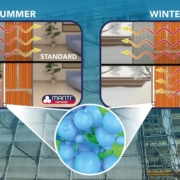
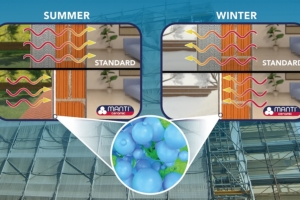
High-reflectance nanotechnological insulation doesn’t merely slow down the transfer of heat like traditional materials. Thanks to the presence of ceramic microspheres with strong reflective capacity, they can reject up to 88% of solar thermal radiation.
In addition, these products have an extremely low thermal conductivity, making highly efficient insulation possible with just a few millimeters of thickness. This is a major advantage over traditional systems, which require much greater thickness and invasive construction work.
Let’s clarify a basic principle of physics: summer heat and the heat generated by heating systems in winter are fundamentally the same. They are both forms of atomic vibration.
The more the atoms vibrate, the higher the temperature; the less they vibrate, the lower the temperature. Scientifically speaking, heat and cold are simply two sides of the same coin!
This is why a product like Manti Ceramic High Density or Medium Density, which combines high reflectivity with almost zero thermal conductivity, manages to block heat in both directions: it prevents it from entering in summer and from escaping in winter.
Thanks to a Solar Reflectance Index (SRI) greater than 111 and the action of its microspheres, these materials function as true thermal shields.
Unlike traditional materials (EPS, rock wool, XPS), which work only through thermal delay, nanotechnological materials reflect radiation and drastically reduce thermal load.
The result? Constant thermal comfort all year round, with minimal thickness and no need for demolition work.
Choosing high-reflectance nanotechnological insulation means investing in real comfort all year long, with fewer construction needs, lower labor costs, and higher energy efficiency.
📧 For more information, write to us at info@manti-ceramic.com
Follow our linkedin page:
• application methods
• real benefits
• comparisons with traditional insulation materials

In this article, we explore how much faster and easier it is to apply a nanotechnological thermal insulation system like Manti Ceramic compared to a traditional thermal insulation system using panels.
In the world of energy-efficient construction, choosing the right insulation system can make a significant difference—not just in energy performance, but also in terms of time, cost, and complexity of on-site operations.
A traditional insulation system with panels requires a long list of preliminary operations:
Handling bulky panels
Installing starter profiles
Gluing and anchoring
Structural modifications such as extending windowsills
Adjusting gutters and flashing
Dismantling and reassembling existing building elements
None of these steps are necessary when applying the Manti Ceramic nanotechnological thermal insulation system, which essentially consists of:
Substrate preparation (similar, but without the need for perfect flatness)
Application of the product directly to the surface with a trowel or roller
Optional reinforced skim coat and finishing layer, as in any insulation cycle
In summary: the Manti Ceramic system eliminates about 40% of the operations required for traditional panel insulation, with an estimated labor time savings of up to one third.

The structural work you can avoid with a nanotechnological thermal insulation system
Another major advantage is the absence of invasive masonry work. With traditional systems, the thickness of the panels (8–16 cm) requires additional modifications, such as:
Replacing or extending windowsills and thresholds
Altering rainwater downpipes and metal flashing
Moving railings, parapets, reveals, and other protruding elements
With the ultra-thin Manti Ceramic system (just a few millimeters), none of these changes are necessary. The result? Simpler construction sites and more satisfied clients.
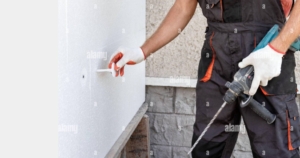
Traditional insulation materials like EPS or XPS often become special waste, requiring regulated (and costly) disposal.
The Manti Ceramic system, on the other hand, only involves removing protective sheets after application.
No cutting
No waste
No offcuts to dispose of
And since Manti Ceramic is completely non-toxic, it has no disposal cost.
Applying a nanotechnological thermal insulation like Manti Ceramic not only guarantees high-level thermal performance thanks to nanotechnology, but it also radically simplifies construction operations.
Less time, less labor, fewer surprises.
Want to learn how to apply the Manti micro-coating quickly and easily?
📩 Write to us at info@manti-ceramic.com
🎥 Follow our linkedin page
You’ll find tutorials, real-life applications, and technical advice for every thermal insulation need!
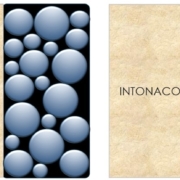
In recent years, the thermal insulation sector has seen a boom in nanotechnology-based products: heat-reflective paints, micro-insulation coatings, thin ceramic-based finishes. They promise efficiency and sustainability, but it’s important to remember that the quality of nanotechnological insulating systems is very different between different products. Not all products on the market offer the same guarantees or the same performance levels.
Cheaper materials may seem attractive, but they risk turning into a bad investment, with poor results and limited durability. On the contrary, products like Manti Ceramic guarantee certified and controlled quality, with demonstrable benefits even through independent appraisals.
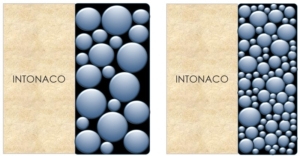
Example of two insulating systems with different microsphere quality
Let’s analyze together the criteria that should guide an informed choice:
✅ Price
A price that is too low is always a synonym for low quality: it means poor raw materials, a low percentage of microspheres, no quality controls, and therefore no real performance guarantees.
✅ Quantity and quality of the microspheres
The heart of a nanotechnology insulation product is its ceramic microspheres: their percentage and integrity make the difference. In many low-cost products, the microspheres are fewer or even broken and crushed, thus losing their ability to properly reflect heat. Manti Ceramic uses certified, perfectly spherical, high-concentration microspheres, carefully selected to ensure consistently high performance.
✅ Certified-quality filler
The binder, called filler, is crucial: if poor, it can compromise the entire mixture, leading to problems of durability, resistance, and toxicity. Manti Ceramic uses a filler with extremely high purity, very low VOC, stable, and free of hazardous substances.
✅ Established brand and traceable supply chain
Manti Ceramic is produced by an industrial group active for over 42 years, certified by SGS, the world’s leading certification body. A controlled supply chain means safety, reliability, and production continuity.
✅ Certified real-world experience
Technical data sheets alone are not enough: you need field tests. Manti Ceramic boasts thousands of documented applications with thermographic images taken before and after the interventions and sworn appraisals by third-party bodies, including the Court of Milan. This is an added value that very few competitors can show.
✅ Long-term resistance
A valid nanotechnology insulation product must withstand weathering, humidity, fungi, mold, and mechanical stresses without losing its performance. True quality is measured by durability and the ability to maintain its characteristics over the years.
Relying on high-quality nanotechnological insulating systemsw means obtaining:
➡ real energy savings
➡ summer and winter thermal comfort
➡ reduction of mold and condensation
➡ protection of facades, even in historical settings
With Manti Ceramic solutions, you can achieve the same results as a traditional thermal coat with just a few millimeters of thickness, saving time, space, and reducing masonry work costs.
Contact us at info@manti-ceramic.com for a free consultation or visit our facebook page where you can find practical videos, technical guides, and product demonstrations.
