
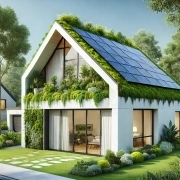
Green Houses and Nanotechnology: The Future of Sustainable Construction
The construction industry is undergoing a technological revolution focused on sustainability and energy efficiency. Green houses and nanotechnology are at the heart of this transformation, offering innovative solutions for optimizing thermal insulation and reducing environmental impact. With the introduction of European regulations, the need for advanced materials is increasingly evident. Among the most promising technologies are nanotechnology-based materials, capable of providing efficient thermal insulation with minimal thickness.
What Are Green Houses?
Green houses are buildings designed to reduce energy consumption, improve living comfort, and minimize environmental impact. These constructions must meet high energy efficiency standards by using innovative materials, low-energy systems, and high-performance thermal insulation.
Nanotechnology and Thermal Insulation for Green Houses

One of the key aspects of achieving the required standards for green houses is thermal insulation. Nanotechnology solutions, such as Manti Ceramic, provide an effective alternative to traditional thermal coatings. Thanks to their composition of ceramic microspheres and advanced polymers, these materials offer:
- High thermal reflectance, reducing heat loss in winter and preventing overheating in summer;
- Minimal thickness, eliminating the need for invasive structural interventions;
- Resistance to humidity and mold, ensuring a healthier and more durable environment;
- Environmental sustainability, thanks to non-toxic materials totally non-toxic and ecological
Advantages of Nanotechnology in Green Houses
The use of nanotechnology-based materials in sustainable construction offers multiple benefits:
- Improved energy efficiency, with a significant reduction in heating and cooling consumption;
- Greater durability, thanks to resistance to atmospheric agents;
- Ease of application, allowing for quick and minimally invasive interventions;
- Compliance with new European regulations on green houses, avoiding future adaptation costs.
Conclusion
Nanotechnology applied to thermal insulation represents the future of green houses. Thanks to materials like Manti Ceramic, it is possible to improve the energy efficiency of both existing and newly constructed buildings, reducing consumption and contributing to more sustainable construction.
For more information on how to make your home more efficient with nanotechnology-based materials, contact us at info@manti-ceramic.com.
Connect with us on LinkedIn to stay updated on the latest innovations in sustainable construction and nanotechnology! Follow us at Savenergy.it Holding LinkedIn
