

THERMAL OR NANOTECHNOLOGICAL PAINTING: THE DIFFERENCES
The choice of how to insulate your home (whether with a thermal paints or a nanotechnological painting), or part of it, is always an important choice and not easy assessment for those who are not experts on the subject.
The thermal paints
Sometimes, it is better to look for a simpler solution, less expensive but still with advantages. In these cases, some people think of thermal paints. There are also products on the market that look like thermal paints, but are actually nanotechnological insulators in a semi-liquid form, and therefore apparently very similar to thermal paints. Let’s see if we can make a difference.
A thermal paint is basically a normal paint to which a thermal additive is added. For example, a thermal paint can be made into a thermal paint can by adding ceramic microspheres and mixing them with the paint can. The limit of these products is obvious. The addition of microspheres, or other thermal additives, is on the product “paint” already ready and therefore the amount that can be added is limited. At most one can reach twenty percent (and often even less). This procedure results in a final product with limited thermal insulation capacity, as the insulating component is very limited. In addition, glass microspheres are normally of low quality. All this means that these paints do not insulate much, but at most can help against condensation or moisture.
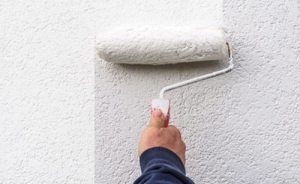
nanotechnological painting
The nanotechnological insulation
A semi-liquid nanotech insulation (a nanotechnological painting), such as Manti Ceramic Media Density, is instead prepared directly in the factory with a very high concentration of ceramic microspheres. These are all intact, very small (and therefore more saturable) and with the addition of additional chemical elements of thermal insulation. For this reason the result is very different. In the case of the Manti Ceramic Media Density, with only one millimeter of thickness you reach the insulating capacity of a traditional coat from 4 centimeters of thickness! In addition, you have a very elastic product (anti cracks), certified anti-mold, flame retardant and very resistant and durable. It can also be painted in any colour you want. Being completely non-toxic, it can be applied outside or inside the house, depending on the needs.
It is therefore an ideal solution when you want to repaint your facade, for example, or the interior walls of an apartment, guaranteeing living comfort and saving on winter heating and summer cooling.
For any request of information write us at info@manti-ceramic.com or fill in the form: form
