
External Wall Insulation: How to Counteract the Urban Heat Island Effect with Nanotechnology Solutions
The Role of Building Facades in the Urban Heat Island Effect
The rise in summer temperatures, particularly in urban areas, has become one of the most pressing challenges in recent years and has icreaased the importance of external wall insulation with thermoreflectant porducts. Urban heat island (UHI) effect, caused by the heat absorption of dark, impermeable surfaces, exacerbates thermal discomfort both indoors and outdoors. In this context, insulating external walls is a key strategy not only to improve indoor comfort but also to help reduce city temperatures.
How the Heat Island Effect Works
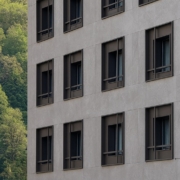
Vertical and horizontal surfaces, like building facades, absorb solar energy throughout the day and release it slowly in the evening and at night. This keeps temperatures high even after sunset, increasing energy consumption for air conditioning and worsening quality of life.
The Limits of Traditional Insulation Systems
Traditional external insulation systems using EPS, mineral wool, or rock wool mainly reduce heat transfer through thermal resistance. However, these materials have very low solar reflectance properties—they cannot significantly reflect solar radiation. As a result, during summer they still absorb a portion of solar heat, increasing surface temperatures and failing to offer real protection against the urban heat island effect.
Nanotechnology-Based External Wall Insulation: A New Approach

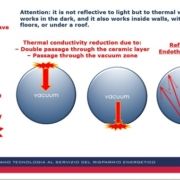
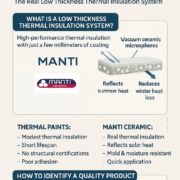
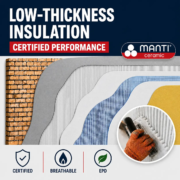
With ultra-thin nanotechnology-based solutions like Manti Ceramic High and Medium Density, it is now possible to reduce solar radiation absorption on facades. These materials contain high-reflectance ceramic microspheres that reflect a significant portion of solar radiation, improving summer performance. An external wall insulation system (as used for flat roofs) based on this technology reduces surface heat build-up, cuts air conditioning energy use, and helps mitigate the urban heat island effect.
With external wall insulation, the thermal wave hits a surface and is reflected.
Benefits for Buildings and the Urban Environmentv external wall insulation with Manti Ceramic
Applying nanotechnology-based coatings on building facades reduces surface temperatures and improves air quality by limiting heat build-up in densely built areas. This results in greater human comfort and reduced CO₂ emissions, making cities more livable even during summer heat waves.
Conclusion
In short, external wall insulation with nanotechnology-based materials is a sustainable, fast, and regulation-compliant solution that meets both winter thermal efficiency needs and summer overheating and UHI mitigation requirements.
For more information or a personalized consultation, feel free to write to info@manti-ceramic.com.
If you want to explore more about our products, application techniques, and updates on thermal insulation for buildings, visit our linkedin page



Leave a Reply
Want to join the discussion?Feel free to contribute!